History & traditions
Why Goa Carnival is celebrated — four days of colour before Lent
A parade at the end of the winter season
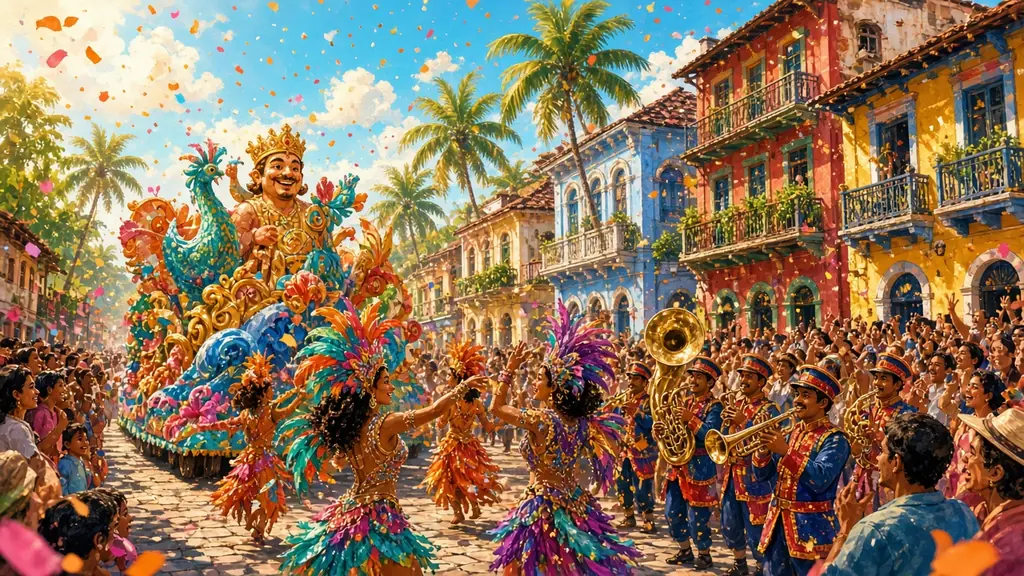
Goa Carnival is held in the days just before Ash Wednesday, when the Christian calendar enters Lent, a period of fasting and restraint. Because Ash Wednesday moves with the lunar calculation of Easter, the Carnival dates shift each year, usually falling in February and sometimes in late January. For four days the towns of Goa — especially Panaji, and also Margao, Vasco and Mapusa — fill with float parades, brass bands, masked dancers, red-and-black village troupes in the interior, and a general permission to be noisy in the street.
It is a cultural festival with Catholic roots, not a temple feast, and it comes at the end of Goa's busy winter tourist season, when the weather is still dry and pleasant.
How it came to Goa
Carnival as a pre-Lenten celebration is old in the Catholic world, from Europe to Latin America, a last public feast before the austerity of Lent. It came to Goa during the centuries of Portuguese rule, and over time it took on a local colour: Konkani songs, Goan brass bands, village clowns, and later the large decorated floats that now lead the official parades. After Liberation the festival continued, and in recent decades the state tourism department has helped to organise and announce the official route and programme.
The figure who opens the show is King Momo, a cheerful, oversized monarch who, in the style of other Carnival cities, declares that the city may revel for the allotted days. There is no single sacred legend here to retell; the meaning is seasonal and social — a public holiday of music and satire before a quieter, more reflective time in the church calendar.
What you actually see
The principal official parade is usually in Panaji, with large floats, dancers in feathers and sequins, and crowds along the historic streets and the riverfront. Margao, Vasco and Mapusa hold their own processions, often a little more local in feeling. In some villages of the hinterland the older, rougher Intruz or red-and-black performances continue, closer to a folk play than to a tourist parade.
Alongside the official events there are street parties, food stalls and, in the coastal villages, a swell of visitors who have come as much for the general atmosphere as for a particular float. The days are hot in the sun and loud; the most photogenic hours are late afternoon, when the light is kind to the painted facades.
Practical notes for travellers
Fly into Goa — Dabolim or the Manohar International Airport at Mopa — and decide early whether you want to be in Panaji for the main parade or in a quieter coastal village with a day trip into town. Rooms in the capital and along the north and south coasts are in high demand that weekend, so book both the flight and the stay well ahead, and only treat parade dates as final once Goa Tourism has published them. Keep water, sun protection and a little patience for closed roads; stand back from the floats, and remember that this is still, for many Goan families, the start of their Lent, not only a show put on for visitors.