History & traditions
Why Lohri is celebrated — bonfires, harvest and Dulla Bhatti
The end of the coldest nights
Lohri is a winter festival celebrated mainly in Punjab, Haryana, Himachal Pradesh, Jammu and Delhi, on the night before Makar Sankranti (called Maghi in Punjab). It usually falls on 13 January, occasionally 14. It marks the passing of the winter solstice season and the coming of longer, warmer days, and it is closely tied to the farming year: the rabi crops, especially wheat and sugarcane, are growing in the fields, and the sugarcane harvest is under way.
It is celebrated by Punjabis of all faiths — Hindus, Sikhs and others — as a seasonal and cultural festival rather than as the festival of one religion.
Where the name comes from
There is no single agreed origin of the name. Popular explanations link it to 'loh', said to mean light or the warmth of the fire; to 'til' and 'rorhi' (sesame and jaggery), which together became 'tilohri' and then 'Lohri'; or to Loi, said in some folk stories to be the wife of the saint Kabir. These are folk explanations, and scholars do not agree on which, if any, is correct.
The ballad of Dulla Bhatti
Many Lohri songs remember Dulla Bhatti, a Punjabi folk hero said to have lived in the time of the Mughal emperor Akbar, in the sixteenth century. According to popular tradition, he robbed the rich and helped the poor, and rescued girls who were being sold, arranging their marriages and giving them dowries himself. The famous song 'Sundar mundriye ho!' tells the story of one such girl. Historians have limited records of his life, and the details of the stories vary, but he remains a symbol of courage and kindness in Punjab's folk memory.
On Lohri evening, children traditionally go from house to house singing these songs and collect sweets, peanuts or money.
Bonfire, songs and food
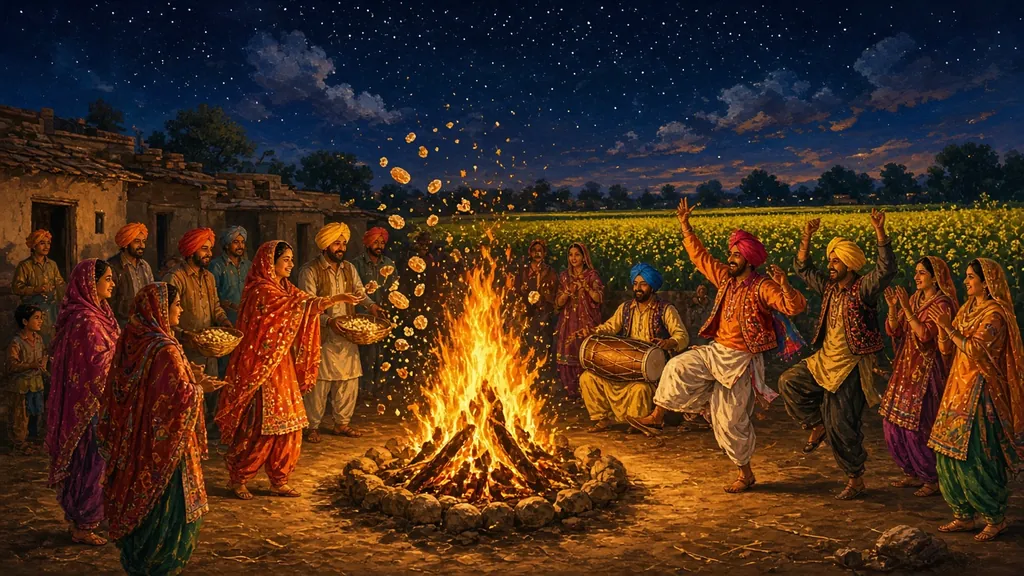
The centre of Lohri is the bonfire, lit at sunset in courtyards and open spaces. Families and neighbours gather around it, throw til (sesame), gur (jaggery), rewri, gajak, peanuts and popcorn into the flames as an offering, and walk around the fire praying for prosperity. Then come bhangra and giddha, dhol beats and folk songs late into the night. The traditional meal is makki di roti with sarson da saag, with gur and rewri passed around.
Lohri has special meaning for families celebrating a first: the first Lohri after a wedding or the birth of a child is often a big party with relatives. In recent years many families have chosen to celebrate a daughter's first Lohri in the same way as a son's, a change widely welcomed in Punjab.
Planning your trip
The Lohri–Makar Sankranti window is a popular time for Punjabis living elsewhere to come home. Flights to Amritsar, Chandigarh, Ludhiana and Jammu get busy, and dense fog in mid-January can cause early-morning delays, so prefer later departures and keep a buffer for onward travel.