History & traditions
Why the Pushkar Mela is held — camels, cattle and Kartik at the holy lake
A fair beside a sacred lake
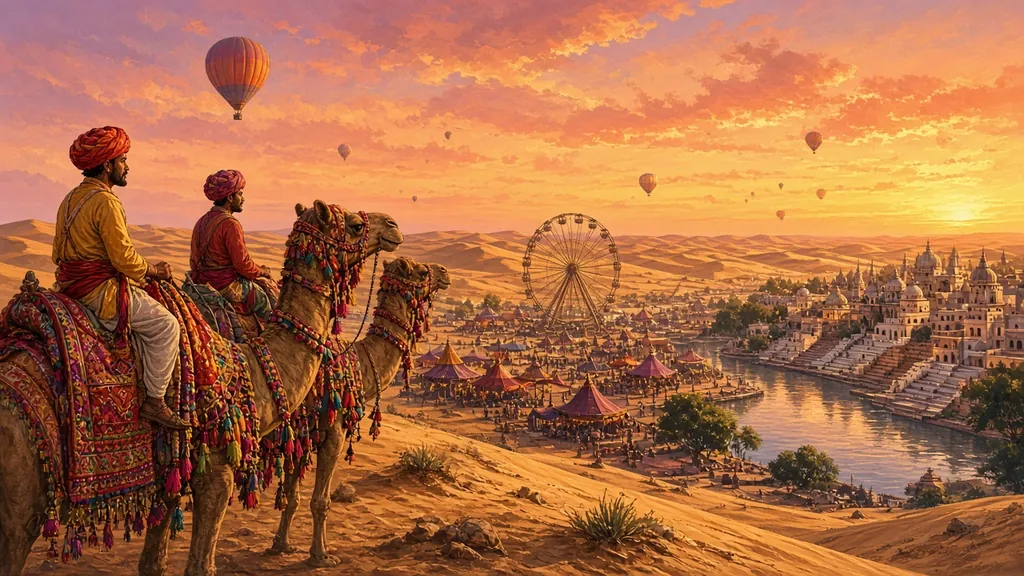
The Pushkar Mela, often called the Pushkar Camel Fair, is held in the small pilgrimage town of Pushkar, in Rajasthan, in the Hindu month of Kartik, usually in October or November. It gathers around Kartik Purnima, the full moon that is one of the most important bathing days at Pushkar Sarovar, the holy lake at the town's centre. For centuries livestock traders have brought camels, cattle, horses and sheep to this season, and around that trade a large cultural fair has grown: camps, a midway of wheels and stalls, competitions, music and a temporary city on the sand.
Pushkar is also among the few towns in India with an old temple dedicated to Lord Brahma, and the combination of pilgrimage and livestock market is what gives the mela its particular character.
Why Kartik Purnima matters here
It is traditionally believed that the lake was formed when a lotus fell from Brahma's hand, and that a bath in the sarovar on Kartik Purnima washes away accumulated sin. Pilgrims come from across Rajasthan and beyond, walk the ghats at dawn, and visit the Brahma temple and the other shrines that ring the water. These are the beliefs as they are held by the town and by visiting families, and the fair has always been timed to that sacred calendar, not set apart from it.
The livestock market itself is a practical, seasonal institution of the desert: animals change hands after the monsoon, before the harder winter, in a place that traders already had a reason to reach.
What the days of the mela look like
In the mornings the animal grounds are at their busiest, with camels decorated in coloured tassels and saddles, and herders from the surrounding villages. Later in the day there are races, tug-of-war, dancing and, in some years, hot-air balloons over the dunes at sunrise or sunset. Evenings fill the fairground and the lakeside bazaar; the ghats remain a place of prayer throughout.
The official fair usually lasts about a week, with the full-moon bath as its spiritual centre. The town is small, and for those days it holds a population many times its usual size.
Practical notes for travellers
The usual way in is to fly to Jaipur and continue to Pushkar by road, often via Ajmer, a journey of several hours. Some travellers also use Jodhpur. Rooms in Pushkar and Ajmer are booked well ahead of the mela, and the last stretch of road is slow. Carry a hat and water for the daytime, a warm layer for the desert night, and visit the ghats with the same quiet you would bring to any temple town. If crowds are not your aim, the days just before the official opening, or the morning of the full-moon bath itself at first light, can be the most memorable — one for the animals and the sky, the other for the lake.