History & traditions
Why Hola Mohalla is celebrated at Anandpur Sahib
A Sikh festival of courage
Hola Mohalla is a Sikh festival held at Anandpur Sahib in Punjab's Rupnagar district, beginning on the day after Holi, usually in March. It is a festival of martial skill, poetry and community, and it draws large crowds of Sikhs and visitors from India and abroad. The celebrations usually run for about three days, with the fair beginning a few days earlier at nearby Kiratpur Sahib.
Guru Gobind Singh's new tradition
Sikh tradition holds that the tenth Guru, Guru Gobind Singh Ji, began Hola Mohalla at Anandpur Sahib, most often dated to 1701. Instead of simply playing with colours, as at Holi, he gathered the Sikhs for mock battles, displays of horsemanship and weaponry, and poetry competitions. It was a time when the young Khalsa, created in 1699, faced constant threats from hill chiefs and Mughal forces, and the festival helped train and inspire the community.
The name is usually explained as follows: 'Hola' comes from the word for attack or charge (from 'halla'), and 'Mohalla' from an Arabic-derived word for an organised procession or column. Taken together, the name suggests a mock charge or an organised march — a deliberate turn from Holi's playfulness towards discipline and readiness.
The Nihangs and gatka
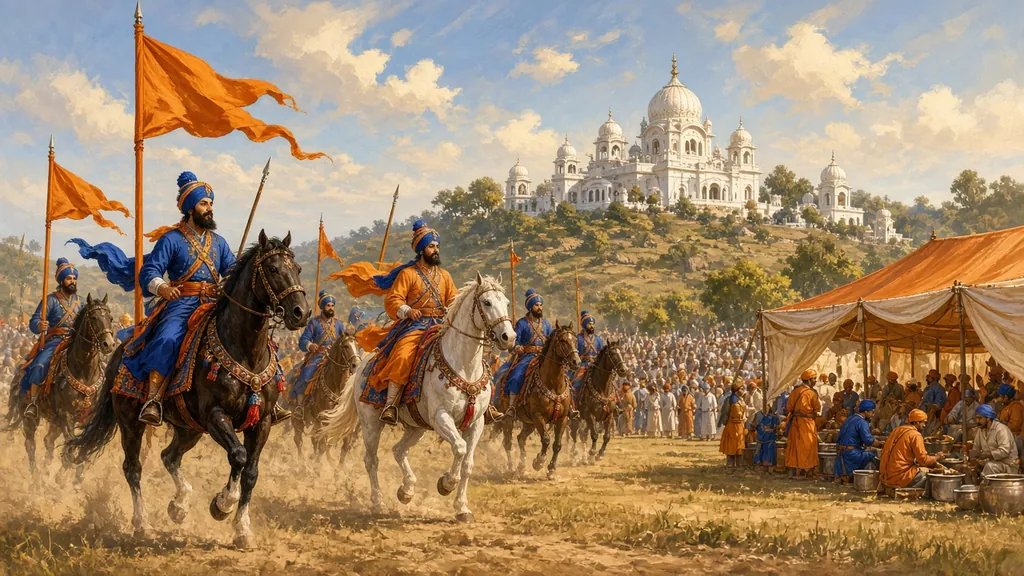
The best-known part of Hola Mohalla today is the display by the Nihangs, the traditional Sikh warrior order known for their blue robes, tall turbans and steel weapons. They show gatka, the Sikh martial art with sticks and swords, along with horse riding feats such as standing on galloping horses, tent pegging and mock combat. Processions led by the Nishan Sahib, the Sikh flag, and by the Panj Pyare move between the gurdwaras of Anandpur Sahib, including Takht Sri Kesgarh Sahib, one of the five Takhts of Sikhism, and Qila Anandgarh Sahib.
Kirtan, poetry and langar
Alongside the martial displays there are religious gatherings with kirtan and katha, recitation of poetry, and kavi darbars. As at every Sikh gathering, langar — the free community kitchen — runs around the clock, and volunteers serve lakhs of meals to everyone who comes, regardless of faith, caste or background. Many families set up their own langars along the roads into Anandpur Sahib.
Planning your visit
The nearest major airport is Chandigarh, about 85 kilometres away, with Amritsar a longer drive. Roads are crowded during the festival, so arrive a day early and stay in Chandigarh, Rupnagar or Kiratpur if Anandpur Sahib is full. Cover your head in gurdwaras, remove your shoes, and keep a respectful distance from riders during horse displays.