History & traditions
Why Ugadi and Gudi Padwa are celebrated — the New Year of Chaitra
A shared New Year in the Deccan
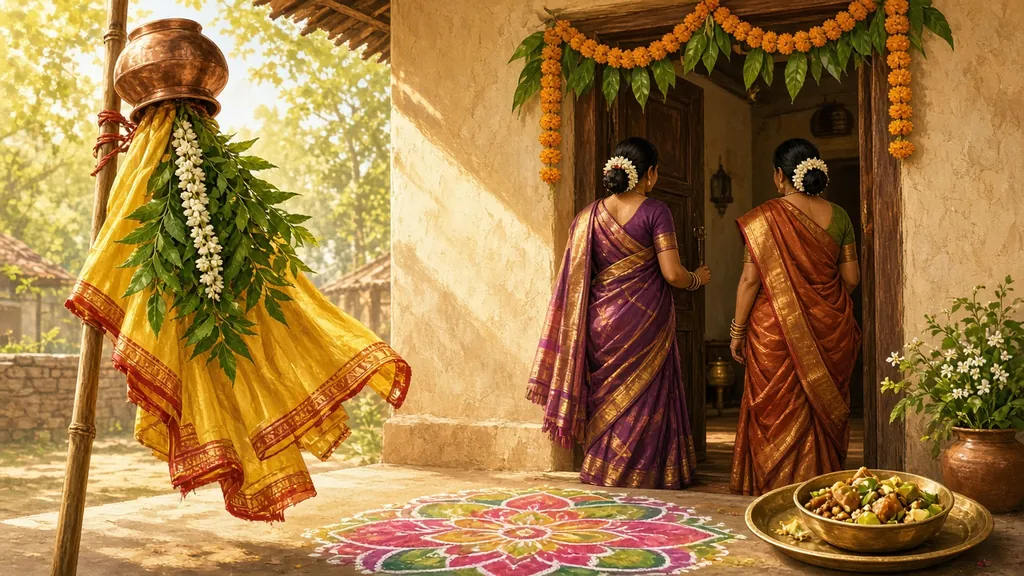
Ugadi and Gudi Padwa fall on the same day: the first day of Chaitra, which begins the lunar new year for many families in the Deccan. Ugadi is the name used in Andhra Pradesh, Telangana and Karnataka; Gudi Padwa is the name used in Maharashtra and parts of Goa. The word Ugadi comes from yuga and adi — the beginning of an age — and Gudi Padwa takes its name from the gudi, the silk-draped bamboo standard raised outside the house.
The day also marks the start of Chaitra Navratri in many calendars. Because it follows the lunisolar year, the English date shifts, but it usually arrives in late March or early April, when the hottest part of summer is still ahead and mangoes are just coming into the markets.
Stories people tell
There is no single founding tale, and families hold more than one tradition side by side. One widely told story is that this is the day Lord Brahma began the work of creation. Another, especially in Maharashtra, links the gudi to the legendary king Shalivahana, whose era is still used in some regional calendars, or to the memory of a victory standard raised after a battle. In some homes the gudi is also spoken of as Brahma's flag, a sign that a new year has opened.
A further tradition, told with affection rather than as history, is that Rama returned to Ayodhya in the spring and that the gudi recalls a royal welcome. These are beliefs passed down in families and kathas, not claims that can be dated like a chronicle, and they sit comfortably together.
How the day is kept
In Telugu and Kannada homes the distinctive taste of the day is ugadi pachadi, a relish that mixes raw mango, neem flowers, jaggery, tamarind, chilli and salt — the six flavours of life, bitter and sweet together. People bathe, wear new clothes, decorate the doorway with mango leaves and flowers, and gather to hear the panchanga shravanam, the reading of the year's almanac.
In Maharashtra a gudi is tied: a bright silk cloth, neem or mango leaves, a garland and an inverted copper or silver pot on a bamboo pole, set on the balcony or by the gate. Families draw rangoli, offer a puja and go out for the Shobha Yatra processions that fill the streets of Mumbai, Pune, Nagpur and many smaller towns. Special dishes such as shrikhand-puri or pooran poli appear on the table, along with neem and jaggery.
Travelling home for the New Year
This is a family morning more than a temple spectacle, so the day itself is best spent at home. Flights into Hyderabad, Bengaluru, Pune, Mumbai and Nagpur fill in the days before the festival, especially when the date falls mid-week and people take a short leave to be there for the puja. Arrive the evening before if you can, so the household is together at dawn when the gudi goes up and the pachadi is tasted.