History & traditions
Why Eid ul-Adha (Bakrid) is celebrated — the festival of sacrifice
The festival of sacrifice
Eid ul-Adha, 'the festival of sacrifice', is one of the two main festivals of Islam, alongside Eid ul-Fitr. In India it is widely called Bakrid or Bakra Eid; the name is often linked in everyday speech to 'bakra' (goat), though some scholars trace it to the Arabic 'baqar' (cattle) or to a 'great Eid' — the origin is not settled. In Kerala it is known as Valiya Perunnal. It falls on the tenth day of Dhul Hijjah, the last month of the Islamic lunar calendar, so like Eid ul-Fitr it moves about eleven days earlier each year.
The story of Ibrahim
The festival remembers the faith of the Prophet Ibrahim (Abraham). According to Islamic tradition, Ibrahim saw in a dream that God was asking him to sacrifice his son, Ismail (Ishmael). Ibrahim told his son, who agreed to submit to God's will. As Ibrahim was about to carry out the command, God called out to him and provided a ram to be sacrificed in Ismail's place. The Quran presents this as a test of faith that Ibrahim had passed. Jewish and Christian traditions tell a related story, in which the son is Isaac, which shows the shared roots of the three Abrahamic faiths.
The link with Hajj
Eid ul-Adha comes at the end of the main rites of Hajj, the pilgrimage to Mecca that every adult Muslim who is physically and financially able should make at least once in their life. The day before Eid is the Day of Arafah, when pilgrims stand in prayer on the plain of Arafat, and many Muslims around the world fast. Many of the Hajj rituals recall the story of Ibrahim, his wife Hajar (Hagar) and Ismail, including the search for water between the hills of Safa and Marwa and the Zamzam well.
How it is observed
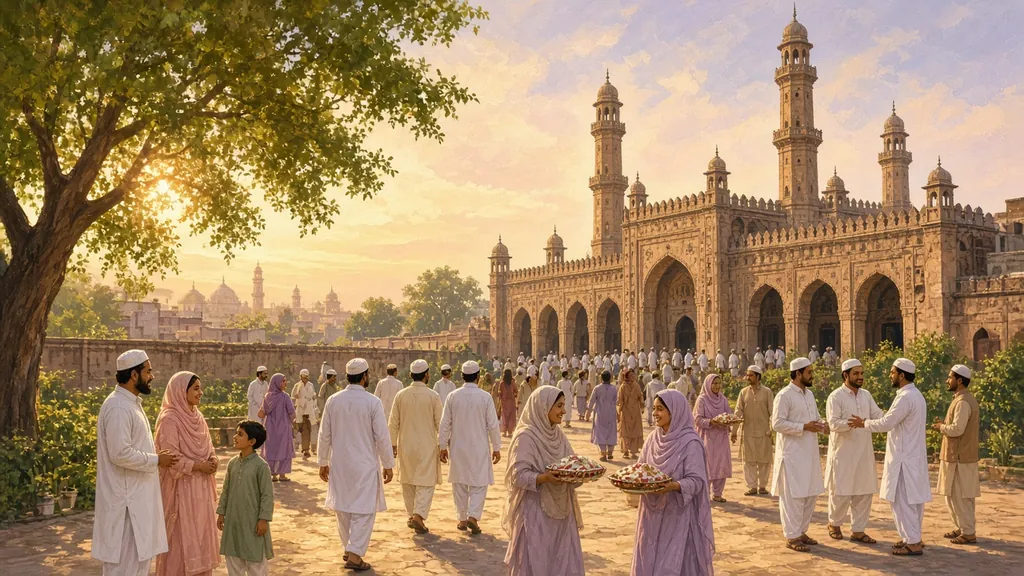
The day begins with a special Eid prayer at mosques and Eidgahs, followed by a sermon. Families who can afford it then perform qurbani, the sacrifice of a goat, sheep or other permitted animal, according to Islamic rules and local laws. The meat is traditionally divided into three parts: one for the family, one for relatives and friends, and one for the poor and needy, so that no one is left out of the celebration. Many people today also give the value of qurbani to charities.
As with every Eid, people wear new clothes, greet each other with 'Eid Mubarak', visit family and share festive dishes such as biryani, korma and sheer khurma. The festive period lasts three days after Eid day, known as the days of Tashreeq.
Planning your trip
Bakrid is a public holiday across India, and its exact date is confirmed only after the Dhul Hijjah moon is sighted, so keep your plans flexible by a day. Flights to Hyderabad, Lucknow, Srinagar, Kozhikode and Gulf cities fill up quickly, and Hajj charter flights also add to traffic at some airports in the weeks before Eid.