History & traditions
Why Bihu is celebrated — Assam's New Year and the three seasons of the year
Three Bihus in the Assamese year
Bihu is the great festival cycle of Assam, and it comes not once but three times, marking the turning of the agricultural year. Rongali or Bohag Bihu, in mid-April, is the spring New Year and the merriest of the three. Kongali or Kati Bihu, in October, is a quieter, more austere observance when the paddy is still in the fields and lamps are lit in the homestead and the granary. Bhogali or Magh Bihu, in mid-January, is the harvest feast, with community meji bonfires and a night of food and gathering.
When people speak of travelling home for Bihu, they usually mean Bohag Bihu: Goru Bihu, when cattle are bathed and honoured, followed by Manuh Bihu, the New Year's day for people, and then several days of dance, visits and song.
A festival of the land, not a single legend
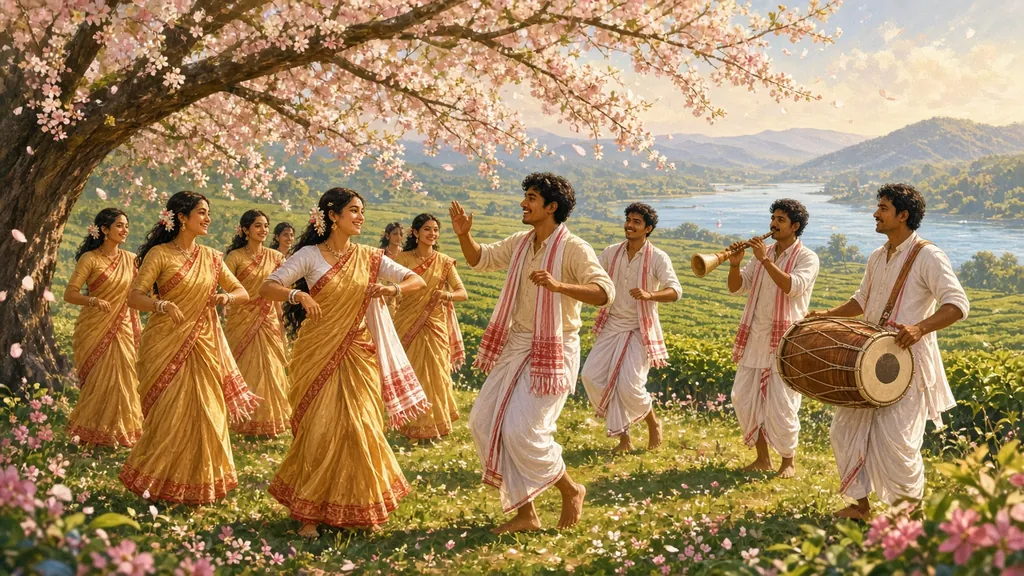
Bihu is not built around one temple story in the way some other Indian festivals are. It is older than any one telling, and scholars have long described it as a spring and harvest celebration of the Brahmaputra valley, shaped by the many communities who have made Assam their home. The dances, the drums, the buffalo-horn pepa and the gamosa — the woven towel of honour — belong to this shared rural life.
Songs and husori parties go from courtyard to courtyard, blessing the household. The feeling of the season is renewal: new clothes, new rice dishes, and the wish that the year just opening will be kind to the fields and to the family.
How Bohag Bihu is kept
On Goru Bihu, cows and oxen are washed, smeared with a paste of turmeric and urad, and offered vegetables and sweets; they are essential partners in the farm, and the day is a gesture of thanks. The next morning, Manuh Bihu, people bathe, put on fresh clothes — women often in the golden muga or pat silk mekhela chador, men with a gamosa at the shoulder — and visit elders for blessings.
Through the week there is Bihu dance in the open, on stages and in village fields, with the dhol, pepa, gogona and toka keeping time. Homes cook pitha, laru, fish and other seasonal food, and friends are welcomed without formality. In the towns, especially Guwahati, public functions and student gatherings run late into the evening.
Flying home to Assam
Guwahati is the main air gateway, with smaller airports at Dibrugarh, Jorhat, Silchar and Tezpur useful if your family is in Upper Assam or the Barak valley. The days around Goru Bihu and Manuh Bihu are the busiest for flights from Delhi, Kolkata, Bengaluru and Mumbai. If you can, reach in time for the first morning with the cattle and the family meal that follows, and keep a little extra time in your plans: April skies in the Northeast can delay a connection, and this is a week when nobody wants to arrive late.